
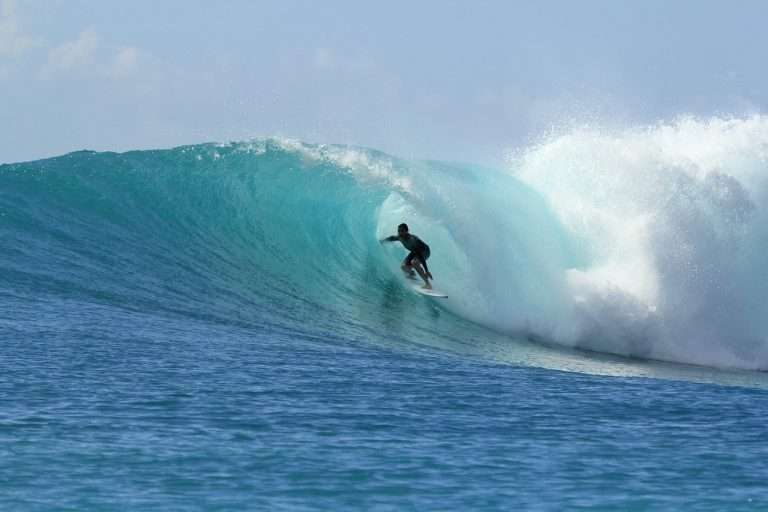
Ein umfassender Guide zum Surfen in Newquay
Newquay ist eine Strandstadt und die Surfhauptstadt Großbritanniens. Hier dreht sich alles um die Surfkultur. Seit den 1960er-Jahren hat sich dieses einst verschlafene Fischerdorf zum Epizentrum des britischen Surfens entwickelt, veranstaltet internationale Wettbewerbe und pflegt eine lebendige Surf-Community. In diesem Guide erfahren Sie alles darüber, warum, wann, wo und wie Sie in Newquay das ultimative Surferlebnis genießen können – inklusive FAQS für Anfänger!
Lokale Community und Surfkultur
Abseits der Wellen ist Newquay die Heimat einer eng verbundenen Surf-Community. In beliebten Lokalen wie The Red Lion mit Blick auf den Hafen oder Belushi’s Bar nahe dem Towan Beach gibt es reichlich Gelegenheit für Surfgespräche. Wenn Sie Gleichgesinnte kennenlernen möchten, schauen Sie hier vorbei:
Newquay Boardriders Club – Seit den ’60ern aktiv, veranstaltet der Club lokale Camps und Jugendprogramme.
Women + Waves – Ein von Frauen geführtes Surfkollektiv mit Kursen, Events und Retreats.
Die besten Surfstrände in Newquay
Fistral Beach: Kronjuwel des Surfens
Keine Liste der Surfspots von Newquay ist ohne Fistral Beach vollständig. Fistral eignet sich am besten für fortgeschrittene bis sehr erfahrene Surfer und bietet einen kraftvollen Beachbreak mit gelegentlichen Riffabschnitten, die bei passenden Bedingungen zum Leben erwachen. Der Strand ist nach Westen bis Nordwesten ausgerichtet, fängt kräftigen Atlantikswell ein und bietet beste Bedingungen, wenn der Wind aus Osten oder Südosten ablandig dreht. Bei mittlerer bis hoher Tide entstehen die saubersten Wellenwände – das ideale Zeitfenster für Ihre Session.
Warum Fistral?
Durch seine Ausrichtung nach Norden wirkt Fistral wie ein Swell-Magnet: Der Strand fängt die Energie tiefer Atlantiktiefs ein und produziert schnelle, druckvolle Wellen, die Aufmerksamkeit und Respekt verlangen. Die Sandbänke erzeugen oft hohle Abschnitte sowie sauber laufende Wellen nach rechts und links, während The Cribbar direkt vor dem Nordende ein legendäres Riff ist, das nur bei seltenen, monströsen Bedingungen erwacht und Wellen von über 20 Fuß hervorbringt, die ausschließlich von Spitzenfahrern gesurft werden.
Tipp: Im Sommer sind die Menschenmengen ebenso dicht wie der Swell, besonders rund um den zentralen Riffabschnitt. Wer jedoch früh am Morgen hinausgeht oder in der Nebensaison den Sonnenuntergang jagt, findet ruhigere Line-ups mit ebenso hochwertigen Wellen. Bringen Sie im Frühling und Herbst Ihren 4/3-mm-Neoprenanzug mit – und denken Sie im Winter nicht einmal daran, ohne einen 5/4-mm-Anzug und komplette Kaltwasserausrüstung ins Wasser zu gehen.
Towan Beach: Sichere Ufer für Lernende
Direkt um die Ecke von Fistral liegt der deutlich sanftere Towan Beach – ein Paradies für Anfänger, Familien und Surfschulen. Geschützt durch die Hafenmauer und eingerahmt von Klippen bietet diese geschützte Bucht weiche, langsam brechende Wellen, die perfekt für Anfänger und unsichere Paddler sind. Am besten surft man hier bei mittlerer Tide, Südwest-Swell und einem Nordost- bis Ostwind für saubere Wellenwände.
Warum Towan Beach?
Durch seine Lage ist Towan weniger der vollen Kraft des Atlantiks ausgesetzt – genau das macht den Strand so anfängerfreundlich. Die sanften Wellen geben Surfneulingen Raum, Selbstvertrauen aufzubauen, Take-offs zu üben und ein Gefühl für die Boardkontrolle zu entwickeln, ohne ständig durchgerüttelt zu werden. Hier finden Sie lokale Legenden wie die Escape Surf School und das Newquay Activity Centre direkt am Sand – der ideale Trainingsort.
Tipp: Bleiben Sie für die beständigsten Wellen im mittleren Strandbereich und gehen Sie bei Ebbe nicht hinaus, wenn felsige Abschnitte sichtbar werden. Mit einem 3/2-mm-Neoprenanzug und einem Lächeln sind Sie in bester Gesellschaft – viele der besten Surfer Newquays standen hier zum ersten Mal auf einer Welle.
Great Western Beach: Entspannte Wellen für Anfänger
Zwischen Towan und Tolcarne gelegen, bietet Great Western Beach ein etwas eigenständigeres Surferlebnis. Der Strand ist beliebt bei Anfängern, die über die Surfschule hinausgehen und ihre Fähigkeiten an kleineren, gleichmäßigen Peaks testen möchten. Dank seines Swell-Fensters von West bis Nordwest und des Klippenschutzes funktioniert der Strand am besten bei steigender Tide und leichtem ablandigem Wind aus Osten.
Warum Great Western Beach?
Die Wellenform eignet sich ideal, um Bottom-Turns und Trimmen zu üben und ein Gefühl für die Wellen zu entwickeln. Hier gibt es zwar nicht den größten Surf, doch was an Druck fehlt, wird durch Beständigkeit und Atmosphäre wettgemacht. Eine steigende Tide überflutet die Sandbänke genau richtig und erzeugt kleine Wellenwände, die ideal sind, um Manöver auf dem Softboard in echte Rides zu verwandeln. Hier herrscht oft eine entspanntere lokale Atmosphäre – etwas weniger Trubel, etwas mehr Begeisterung.
Tipp: Für mehr Platz und Ruhe ist dieser Strand die beste Wahl. Der Weg hinunter führt allerdings über einen steilen Pfad (inklusive unvermeidlichem Schnaufen), aber die Mühe lohnt sich.
Watergate Bay: Zwei Meilen voller Möglichkeiten
Nur zehn Autominuten nördlich von Newquay liegt Watergate Bay, ein weitläufiger, zwei Meilen langer Strand, der besonders für fortgeschrittene Surfer und Roadtripper mit einer Auswahl an Boards im Kofferraum geeignet ist. Dank seiner Ausrichtung nach West bis Nordwest nimmt der Strand verschiedene Swells auf und kommt mit Ostwind gut zurecht – damit ist er einer der vielseitigsten Surfstrände der Region.
Warum Watergate Bay?
Anders als manche Strände, die eine bestimmte Tide brauchen, funktioniert Watergate in allen Tidephasen – Sie sind also nie zu früh oder zu spät. Durch die weitläufige Küstenlinie findet sich immer ein Peak für Sie allein; selbst an vollen Tagen wirkt der Strand nie überlaufen. Die Sandbänke verändern sich mit den Jahreszeiten und schaffen einen abwechslungsreichen Spielplatz, der sich je nach Größe und Winkel des Swells von sanften Schultern bis zu steileren Wellenwänden wandelt. Fortgeschrittene Surfer finden viel Platz, um Manöver zu üben, ohne den einschüchternden Druck enger Line-ups wie bei Fistral. In der Nähe des Parkplatzes gibt es einige Verleihe und Cafés – eine komfortable und gut ausgestattete Option.
Tipp: Sehen Sie sich bei Ihrer Ankunft mehrere Strandabschnitte an; manchmal verstecken sich die besten Wellen 200 Yards vom Hauptfeld entfernt. Am besten bei mittlerer bis hoher Tide und Südwest-Swell – ideal für fortgeschrittene Surfer, die ruhige Sessions suchen.
Crantock Beach: Ruhig und malerisch
Der Strand ist von Dünen und der Gannel-Mündung eingerahmt und bietet eine besonders schöne Kulisse. Wer beim Surfen Ruhe sucht, findet in Crantock Beach ein echtes Juwel. Bei Südwest-Swell und auf Nordost drehendem Wind liefert Crantock lange, gut surfbare Peaks über der Sandbank. Am besten bei mittlerer bis hoher Tide gesurft, ist der Strand die ideale Auszeit für fortgeschrittene Surfer, die Einsamkeit und geschmeidige Turns suchen.
Warum Crantock Beach?
Die Flussmündung kann bei Ebbe starke, wechselnde Strömungen erzeugen und sollte daher von Anfängern oder unerfahrenen Solosurfern gemieden werden. Bringen Sie außerdem Ihre eigene Ausrüstung mit, da die Möglichkeiten zum Surfverleih hier begrenzt sind. Wenn die Bedingungen stimmen, belohnt Crantock Geduld mit langen, entspannten Rides, die wie geschaffen dafür wirken, geschmeidige Linien zu ziehen.
Tipp: Der Strand ist weniger überlaufen als die leichter erreichbaren Strände Newquays und bietet einen Ort, an dem Sie sich wirklich eins mit dem Meer fühlen können.
Wann ist die beste Zeit zum Surfen in Newquay?
Frühling/Sommer (April–August)
Ideal zum Lernen: wärmeres Wasser (bis zu 18°C im August), sanfte Wellen und mehr Tageslicht. Während der Schulferien sind die Strände stark besucht.
Herbst (September–November)
Newquays goldene Jahreszeit. Beständiger Swell trifft auf anhaltende Wärme. Die Menschenmengen werden kleiner und die Wellen erreichen ihre beste Qualität – erfahrene Surfer fiebern dieser Zeit entgegen.
Winter (Dezember–März)
Für die ganz Hartgesottenen. Große Swells rollen herein, der Wind peitscht die Küste und die Wassertemperaturen sinken auf 8–10°C. Die Mutigen werden mit epischen Bedingungen und fast leeren Line-ups belohnt.
Surfbedingungen und Vorhersagen
Wer Newquays Surfbedingungen versteht, schafft die Grundlage für eine erfolgreiche Session. Das sollten Sie wissen:
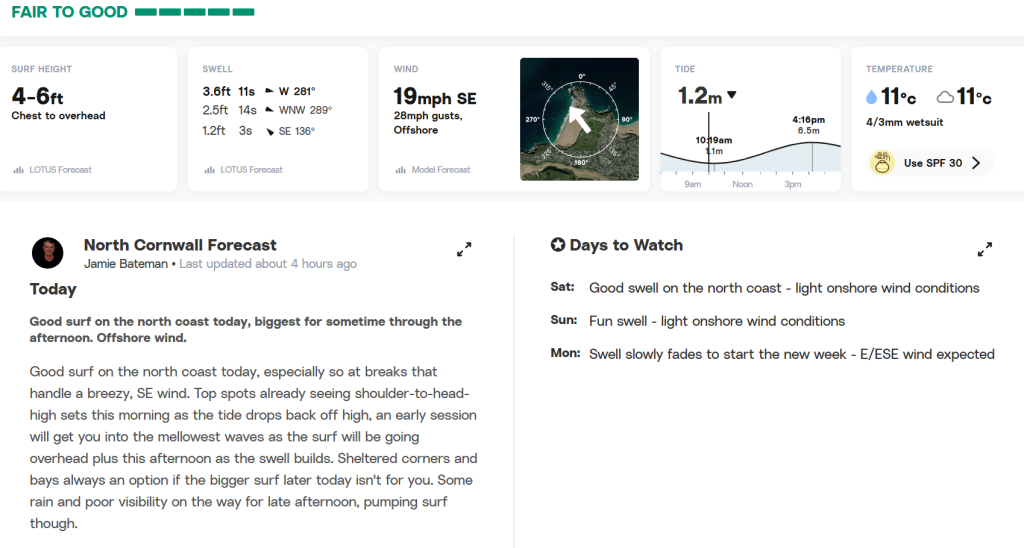
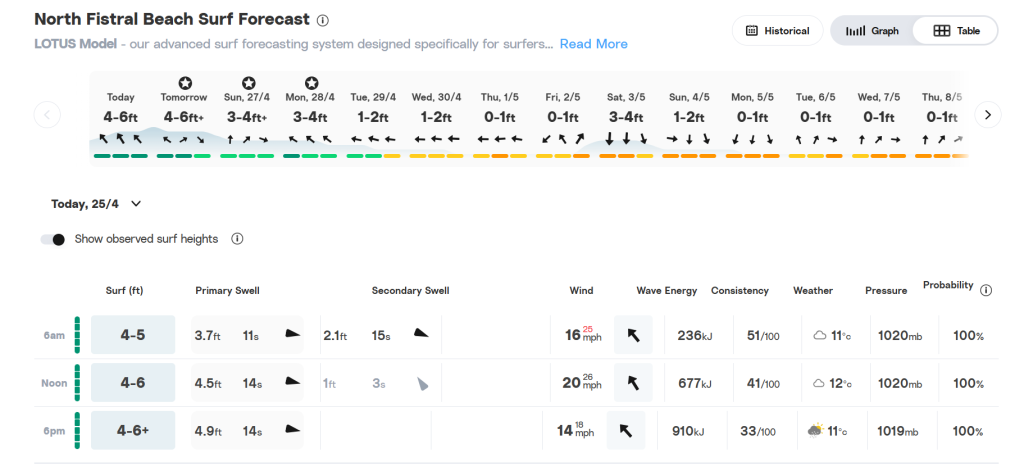
Vorhersage für North Fistral Beach auf Surfline
Swell-Richtung: Nutzen Sie Apps wie Surfline, um die Bedingungen zu prüfen. West bis Nordwest funktioniert am besten.
Swell-Höhe: Wird in Fuß gemessen. Anfänger sollten sich auf 1-3 Fuß beschränken, während erfahrene Surfer vielleicht 4-6 Fuß+ suchen.
Swell-Periode: Längere Perioden (10+ Sekunden) bedeuten im Allgemeinen sauberere, kraftvollere Wellen.
Windrichtung: Ablandige Winde (in Newquay aus Osten) sorgen für sauberere Wellen. Auflandige Winde (aus Westen) führen zu unruhigeren Bedingungen. Für detaillierte Windvorhersagen können Sie Windguru nutzen.
Tiden: Die meisten Strände von Newquay funktionieren am besten bei mittlerer bis steigender Tide. Die Riffbreaks von Fistral erwachen bei hoher Tide zum Leben.
Lokale Einblicke:
- Der „Newquay-Effekt“ bedeutet oft, dass die tatsächliche Wellengröße kleiner ist als vorhergesagt
- Nach Süden ausgerichtete Strände wie Great Western können an stürmischen Tagen Schutz bieten
Surfaktivitäten und -kurse mit Adventuro


Adventuro bietet in Newquay hervorragende Surferlebnisse für jedes Niveau:
Surfstunden im Newquay Activity Centre: Professionelles Coaching für jedes Niveau – von absoluten Anfängern bis zu fortgeschrittenen Surfern, die ihre Technik perfektionieren möchten. Die gesamte Ausrüstung wird bereitgestellt.
3-Tage-Surfpaket des Adventure Club: Ideal für alle, die mit strukturierten Kursen über drei Tage tief in das Surferlebnis eintauchen möchten.
Privates Surfcoaching: Einzelstunden, die auf Ihre persönlichen Bedürfnisse und Ziele zugeschnitten sind.
Familien-Surf kurse: Speziell für Familien entwickelt, die in einer sicheren und unterhaltsamen Umgebung gemeinsam lernen möchten.
Surf-Safari: Fortgeschrittene Surfer erkunden mit lokalen Guides weniger bekannte Strände rund um Newquay, um abseits der Menschenmengen die perfekten Wellen zu finden.
Die Preise reichen von £35 für Gruppenkurse bis zu £120+ für privates Coaching. Die meisten Pakete beinhalten den Verleih von Neoprenanzug und Board.
Ausrüstung: Neoprenanzüge mieten

Mit leichtem Gepäck unterwegs? In der ganzen Stadt gibt es Verleihe, die oft direkt am Strand liegen.
Wo Sie mieten können:
Boardwalk Surf Shop – Große Boardauswahl und freundliche Beratung.
Fistral Beach Surf Hire – Direkt am Sand gelegen, besonders bequem.
Preisrahmen – Surfboard: £10–£15 pro Tag; Neoprenanzug: £5–£10 pro Tag
Was Sie anziehen sollten:
Sommer: 3/2-mm-Neoprenanzug
Frühling/Herbst: 4/3-mm- oder 5/3-mm-Neoprenanzug mit Booties
Winter: 5/4-mm-Neoprenanzug oder dicker, außerdem Handschuhe und Haube
Unterkünfte für Surfer
Budget:
St Christopher’s Inn – Hostel direkt am Strand mit lebendiger Atmosphäre.
Berties Lodge – Schlicht, zentral und erschwinglich.
Mittelklasse:
Smarties Surf Lodge – Entspannt, im Surf-Stil eingerichtet und ideal für kleine Gruppen.
Hotel Victoria – Klassisches viktorianisches Hotel mit Meerblick und Surfpaketen.
Camping/Glamping:
Trevella Holiday Park – Ruhig gelegen, mit Zelt-Lodges und Pods.
Newquay View Resort – 15 Gehminuten bis Watergate Bay.
Surf-Events und Wettbewerbe
Boardmasters Festival (August) – Surf-Wettbewerb und Livemusikfestival.
Englische Surfmeisterschaften (Mai) – Erleben Sie Großbritanniens Beste in Aktion am Fistral.
Night Surf (Juni) – Surfen unter Flutlicht.
Tipp: Buchen Sie Ihre Unterkunft an Veranstaltungswochenenden frühzeitig, da sich die Stadt schnell füllt.
Sicherheitstipps und Surf-Etikette
Rettungsschwimmer & Zonen: Surfen Sie immer zwischen den roten und gelben Flaggen. Rettungsschwimmer überwachen die wichtigsten Strände von April bis Oktober.
Gefahren: Achten Sie auf Brandungsrückströme, besonders bei Ebbe. Meiden Sie Felsen und Riffabschnitte, wenn Sie unsicher sind.
Surf-Etikette:
- Droppen Sie nicht in die Welle eines anderen Surfers.
- Respektieren Sie das Line-up und warten Sie, bis Sie an der Reihe sind.
- Denken Sie daran: Es ist eine Community, kein reiner Wettbewerb.
Mehr als Surfen: Wasseraktivitäten mit Adventuro
Newquay bietet neben dem Surfen zahlreiche weitere Wasserabenteuer:


Coasteering: Kombinieren Sie Klippensprünge, die Erkundung von Meereshöhlen und Wildschwimmen zu einem adrenalingeladenen Küstenabenteuer.
SUP in Crantock: Ruhiges Stand-up-Paddling durch die malerische Gannel-Mündung.
Kajakabenteuer: Erkunden Sie versteckte Buchten und Strände vom Seekajak aus.
Bodyboard-Kurse: Eine unterhaltsame Alternative zum Surfen, die leichter zu erlernen ist.
Schnorchel-Safaris: Entdecken Sie Newquays Unterwasserwelt bei geführten Schnorcheltouren.
Lokale Küche
The Fish House – Gehobene Küche an der Küste nahe Fistral.
Box & Barber – Veganerfreundliche Brunches und Strandatmosphäre.
Rick Stein’s Fistral – Frische Meeresfrüchte mit atemberaubendem Meerblick.
Letzte Tipps zum Surfen in Newquay
Packliste: Surf-Wachs, Zink-Sonnencreme, wasserdichte Handyhülle, wiederverwendbare Wasserflasche, Ohrstöpsel.
Anreise: Züge zum Bahnhof Newquay. Direktflüge zum Flughafen Newquay. Busse verkehren regelmäßig.
Unterwegs vor Ort: Zu Fuß gehen, ein Fahrrad mieten oder in die lokalen Go-Cornwall-Busse steigen.
FAQS für Anfänger
Vom Strand aus sieht Surfen mühelos aus, doch vor dem Hinauspaddeln sind Fragen völlig normal. Wenn Sie neu im Sport oder einfach neu in Newquay sind, finden Sie hier Antworten auf einige häufige Fragen.
Muss ich ein guter Schwimmer sein?
Sie sollten sich im Meer wohlfühlen, müssen aber kein Olympionike sein. Surfkurse finden in hüft- bis brusttiefem Wasser statt, und die Trainer sind in Wassersicherheit geschult. Während der Saison überwachen Rettungsschwimmer außerdem die wichtigsten Strände.
Ist Surfen bei Regen sicher?
Absolut. Sie werden sowieso nass! Vermeiden Sie jedoch das Surfen bei Donner und Blitz und prüfen Sie nach starkem Regen die Hinweise zur Wasserqualität, besonders an Stränden im Stadtzentrum.
Brauche ich eigene Ausrüstung für einen Kurs?
Nein. Die meisten Surfschulen in Newquay, einschließlich der Partnerzentren von Adventuro, stellen alles bereit – Neoprenanzug, Board und bei Kälte manchmal sogar Booties oder Handschuhe.
Was sollte ich unter dem Neoprenanzug tragen?
Ein Badeanzug oder eine Badehose sind völlig ausreichend. In den kühleren Monaten sorgt ein Rashguard oder eine wärmende Basisschicht für zusätzliche Wärme. Vermeiden Sie Baumwolle, da sie Wasser speichert und schnell kalt wird.
Was, wenn ich nicht „fit“ genug bin?
Surfen ist anstrengend, aber die Kurse sind auf ganz normale Menschen abgestimmt. Rechnen Sie damit, müde zu werden, viel zu lachen und noch öfter zu stürzen. Das Einzige, was Sie wirklich brauchen, ist Begeisterung.
Kann ich als Anfänger allein surfen?
Besser ist es, zuerst ein paar Kurse zu besuchen. Selbst an sanften Stränden ist es entscheidend, Strömungen zu erkennen und Wellen zu lesen. Außerdem lernen Sie mit einem Trainer oder in einer Gruppe schneller – und haben mehr Spaß.
Noch unsicher? Damit sind Sie nicht allein. Die meisten Surfer in Newquay standen einmal am Strand und fühlten genau dasselbe. Ob Surfen das Richtige für Sie ist, finden Sie nur heraus, indem Sie es ausprobieren – also schnappen Sie sich ein Board, wachsen Sie es und wagen Sie sich ins Wasser. Die Wellen der Surfhauptstadt Großbritanniens warten auf Sie.