
10 Techniques to Master Your Stand Up Paddle (SUP) Surfing Skills
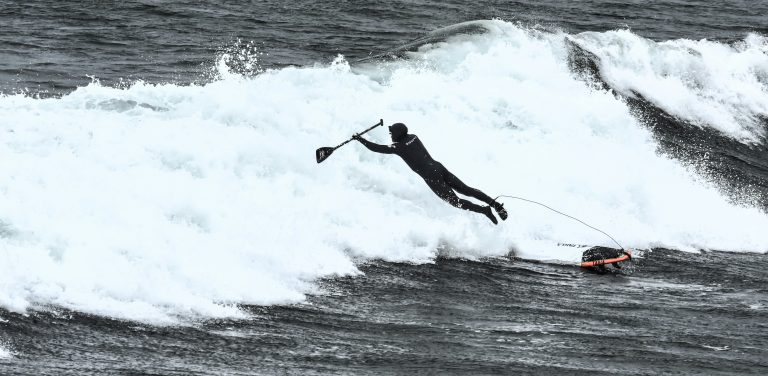
Ready to elevate your Stand Up Paddle (SUP) Surfing skills to the next level? If you’re just starting out, transitioning from flat water paddling, or just looking to refine your wave-riding techniques on your Stand Up Paddle board, we’ve got 10 must-know techniques to help you learn, improve and master your SUP Surfing Skills.
Table of Contents
- What is Stand Up Paddle (SUP) Surfing?
- Choosing the Right SUP Surf Equipment
- Top SUP Surfing Boards from Leading Brands
- Fitness and Conditioning for Stand Up Paddle Surfing
- Mastering the Basics of Stand Up Paddle (SUP) Surfing
- Reading the Ocean: Timing Is Everything in SUP Surfing
- Advanced SUP Surfing Techniques and Progression Paths
- Common Mistakes in SUP Surfing and How to Avoid Them
- Environmental Stewardship and Ethics in SUP Surfing
- Best SUP Surf Spots in the UK
- Preparing for Your Stand Up Paddle Surfing Trip in the UK
- Fun SUP Surfing Fact Break!
- FAQs and Problem-Solving in SUP Surfing
- Final Thoughts on SUP Surf Techniques
What is Stand Up Paddle (SUP) Surfing?
Stand Up Paddle (SUP) Surfing is a water sport that combines elements of traditional surfing and paddling. Riders stand on a larger, more stable Stand Up Paddle board and use a long paddle to propel themselves through the water and catch ocean waves.
Unlike traditional surfing, where the surfer lies on the board and paddles with their arms, SUP surfers maintain a standing position, providing a higher vantage point to see incoming waves and navigate.
This sport engages the core muscles, improves balance, and offers a full-body workout, making it a great way to enjoy the water and have much fun.
Choosing the Right SUP Surf Equipment
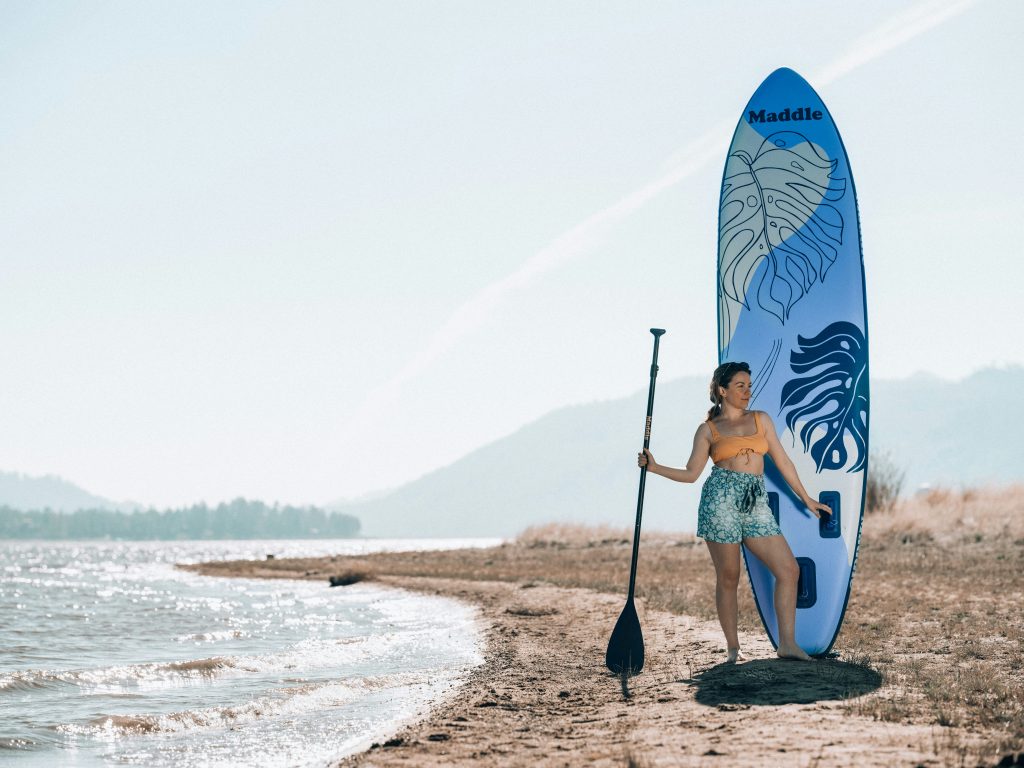
When it comes to SUP surfing, having the right equipment can make all the difference between an enjoyable ride and a frustrating one. In this section, we’ll guide you through the essentials of choosing the perfect Stand Up Paddle board and paddle.
If you’re a beginner looking for stability or an advanced rider chasing waves, we’ve got the details to help you find the gear that fits your style and goals. Let’s make sure you’re equipped for success!
Types of Stand Up Paddle Boards
Understanding the types of Stand Up Paddle boards is crucial for selecting the one that suits your skill level and surfing goals.
- All-Around Stand Up Paddle Boards: Versatile and suitable for beginners; good for flat water and small waves.
- Touring Stand Up Paddle Boards: Designed for long distances and offer excellent glide on the water surface.
- Surfing Stand Up Paddle Boards: Shorter and narrower for better maneuverability on ocean waves.
- Inflatable Stand Up Paddle Boards: Portable and durable; a good idea for beginners and travelers due to their ease of transport.
- Hard Stand Up Paddle Boards (Solid Boards): Offer better performance but require more care and are less forgiving than inflatable boards.
SUP Board Types and Specifications
Choosing the right Stand Up Paddle board is like finding the perfect dance partner – it needs to match your style and skill level.
- Planing Hulls: Flat and wide, these boards ride on top of the water surface, making them ideal for surfing.
- Displacement Hulls: Shaped like a canoe or kayak, better for flat water but not recommended for surfing.
Inflatable vs. Hard Stand Up Paddle Boards:
- Inflatable SUPs: Great for beginners due to their stability and portability. They are also a good idea if storage space is limited and are ideal for SUP yoga.
- Hard Stand Up Paddle Boards (Solid Boards): Offer better performance in surf conditions but require careful handling. They are preferred by advanced SUP surfers.
Surfboard Size Matters
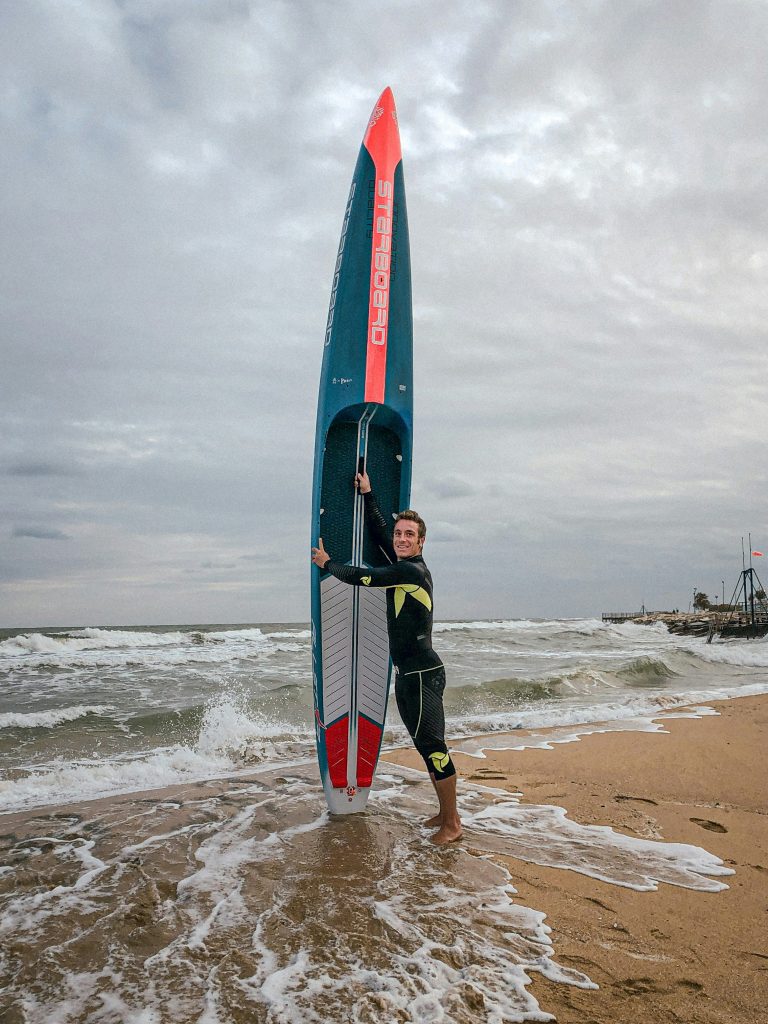
- Larger Boards: More volume provides better stability, perfect for those new to Stand Up Paddle surfing. A larger board is the easiest way to improve your balance and confidence.
- Smaller Boards: Offer greater maneuverability but require more skill to handle. A smaller board is suitable for advanced riders seeking to perform quick turns and ride powerful waves.
Pro Tip: A wider board provides more stability on the water surface, which is crucial when you’re starting out and helps maintain a proper standing position.
SUP Paddle Selection
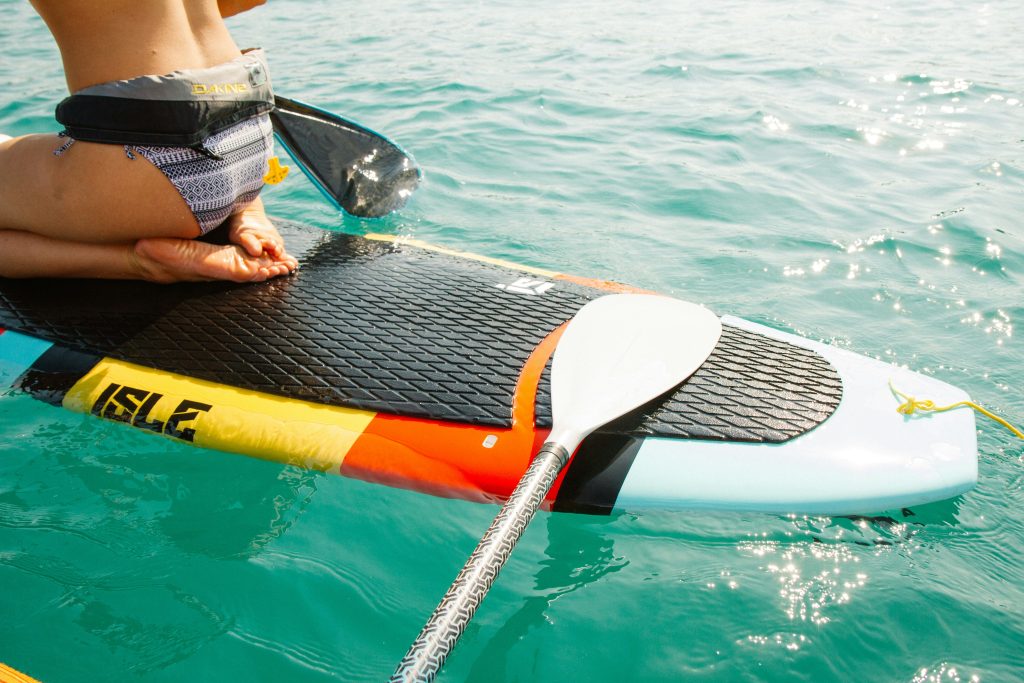
Your Stand Up Paddle (SUP) paddle isn’t just a prop – it’s your engine and steering wheel. Choosing the right paddle blade size and material can make a significant difference in your performance.
Paddle Materials:
- Carbon Fiber: Lightweight and stiff for efficient energy transfer, ideal for powerful strokes.
- Aluminum: Durable and affordable but heavier, which can affect your upper body endurance.
Paddle Blade Size and Shape:
- Teardrop Blades: Provide powerful strokes, ideal for catching waves and performing quick maneuvers.
- Rectangular Blades: Offer smoother strokes, suitable for long distances and touring.
Remember, a lighter paddle reduces fatigue on your upper body, allowing for longer, more enjoyable surf sessions.
Top SUP Surfing Boards from Leading Brands
we’ve rounded up some of the top SUP surfing boards from trusted brands, each offering something unique to elevate your experience on the water. From inflatable options that balance convenience with performance, to hard boards built for sharp turns and fast waves, we’ll help you find the perfect match.
1. Allrounder Pro 10’6″ by Starboard (Inflatable SUP Board):
Features: Versatile performance with the convenience of an inflatable Stand Up Paddle board and a planing hull design.
Ideal For: Beginners to intermediate surfers seeking stability and ease of use.
2. Wave Rider 9’0″ by Naish (Hard Stand Up Paddle Board):
Features: Shorter length and lower volume (low volume) for advanced maneuvers like bottom turns and top turns.
Ideal For: Intermediate to advanced surfers seeking a responsive ride on powerful waves.
3. Cruiser 11’0″ by Red Paddle Co (Inflatable Stand Up Paddle Board):
Features: Larger volume and stability, great for learning, SUP yoga, and cruising on calm waters.
Ideal For: Beginners and intermediate paddlers looking for a full-body workout.
Note: Always consider your skill level, body weight, and the types of Stand Up Paddle boards that match your surfing ambitions.
Fitness and Conditioning for Stand Up Paddle Surfing
From balance training to core workouts and paddle stroke strength, these exercises are tailored to help you stay steady on your board and power through waves with ease. These targeted movements will improve your performance and keep you injury-free.
SUP Surf Exercises for All Skill Levels
Improve your performance with targeted workouts that focus on core muscles, upper body, and balance.
Balance Training:
- Single-Leg Squats: Improve balance and strengthen stabilizing muscles, essential for maintaining a proper standing position on your Stand Up Paddle board.
- Stability Ball Exercises: Mimic the instability of the water surface, helping you adapt to ocean waves.
Core Muscles:
- Planks and Side Planks: Build a strong core for better balance and powerful strokes, crucial for paddling in windy conditions.
- Russian Twists: Enhance rotational strength for paddling and executing quick turns.
Upper Body and Paddle Strokes:
- Pull-Ups: Develop upper body strength for more effective paddle strokes, helping you maintain speed over long distances.
- Resistance Band Rows: Simulate the paddling motion to build endurance and improve your Stand Up Paddle surfing technique.
SUP Surf Yoga and Flexibility
Stay flexible to improve your balance, reduce the risk of injury, and enhance your Stand Up Paddle surfing experience.
SUP Surf Yoga: Practicing SUP yoga on your board enhances balance, engages your core muscles, and connects you with the natural movement of the wave.
Dynamic Stretching: Warm up with movements that mimic paddling motions.
Flexibility Routines: Incorporate daily stretching to prevent injuries.
Fun Fact: SUP yoga not only engages your core muscles but also makes balancing on your Stand Up Paddle board second nature, enhancing your surf stance.
Mastering the Basics of Stand Up Paddle (SUP) Surfing
From finding the right stance to perfecting your paddling, these tips will set you up for success on the water. These techniques will help you with maintaining balance on flat water or catching waves, nailing the fundamentals and give you more control and confidence on your board.
Stance and Balance: Finding the Right Position
We are focusing on the importance of stance and balance in SUP surfing, helping you find the right positioning for smooth paddling and wave control. By refining these basic techniques, you’ll be able to adapt more naturally to changing conditions and enjoy a more stable, confident ride.
Neutral Stance:
- Feet parallel, shoulder-width apart, centered between the board’s rails, ensuring your body weight is evenly distributed.
- Helps maintain a straight line when paddling, which is important for efficiency over long distances.
Surf Stance:
- One foot back: (usually your right foot if you’re regular-footed), weight slightly on your back foot for better control on waves.
- Front Foot Position: Near the center handle of the board, ensuring a proper foot position.
- Back Foot Position: Towards the tail of the board for maneuverability during bottom turns and top turns.
Quick Tip: Keep your knees bent and your gaze forward to maintain balance and adapt to the natural movement of the wave and breaking waves.
Paddling Techniques: The Right Technique for Success
These essential paddling techniques will improve your efficiency and control on the water. Mastering these techniques is key to navigating waves and maintaining speed. By refining your paddle work, you’ll be better equipped to catch waves at the perfect moment and steer with precision, making every stroke more enjoyable.
Forward Stroke:
- Engage your core muscles, reach forward, and immerse the paddle blade fully into the water.
- Use powerful strokes and maintain a straight line to gain enough speed to catch waves.
Turning:
- Sweep Stroke: Paddle in a wide arc to turn the board, ideal for gentle direction changes.
- Cross-Bow Turn: For quicker, sharper turns without switching paddle sides, useful in windy conditions.
- J-Stroke: Helps in steering while maintaining a straight line, perfect for paddling over long distances.
Quick Strokes:
- Short and fast strokes are the easiest way to accelerate when incoming waves approach, helping you catch the right wave at the right time.
Remember: Your paddle is not just for paddling—use it for balance and support during maneuvers.
Reading the Ocean: Timing Is Everything in SUP Surfing
In SUP surfing, understanding the rhythm of the ocean is key. The right timing can mean the difference between catching a perfect wave or missing it entirely. By learning to read the water and anticipate sets, you’ll position yourself for success.
Spotting the Right Wave
Not every wave is worth chasing, and recognizing the right one is essential for success. Start small to build your confidence, as smaller waves offer a forgiving environment to practice your technique. As you watch the ocean, focus on reading incoming sets to find the wave that feels right for your skill level. The better you understand wave behavior, the more control you’ll have when positioning yourself.
- Start with Small Waves:
- Small waves are ideal for building confidence and mastering basics.
- Smaller waves are more forgiving and allow for practice without the risk of powerful waves.
- Watch for Incoming Waves:
- Learn to read the sets and pick the right wave that feels right.
- Understand the natural movement of the wave to position yourself correctly.
Positioning Yourself for SUP Surfing
Proper positioning in the water is key when it comes to catching waves. Stand in deeper water for more reaction time, and always face the direction where the waves are breaking. Being in the right spot on the wave’s face allows you to ride it with control and confidence. Avoid shallow areas to prevent accidents and give yourself room to maneuver.
Stand in Deeper Water:
- Gives you more time to react and catch the wave.
- Avoid shallow water where you might hit the bottom if you fall.
Face the Right Direction:
- Always be aware of where the wave is breaking.
- Position yourself in the right spot to catch the wave’s face.
Timing in SUP Surfing
Timing your paddle strokes with the wave’s speed is crucial for a smooth catch. Start paddling early, using powerful strokes to match the wave’s pace before it breaks. With practice, you’ll master the art of catching the wave at just the right moment, resulting in a thrilling surf every time.
- Paddle to match the speed of the wave before it breaks.
- The best way to catch a wave is to start paddling early with powerful strokes.
Understanding the ocean’s patterns and your positioning will greatly impact your SUP surfing experience, setting you up for better waves and more successful sessions.
Advanced SUP Surfing Techniques and Progression Paths
As you advance in SUP surfing, it’s all about refining your skills and tackling more challenging maneuvers. The next steps in your progression are focusing on mastering advanced techniques that will take your SUP Surfing skills to the next level.
Advanced SUP Surfing Maneuvers
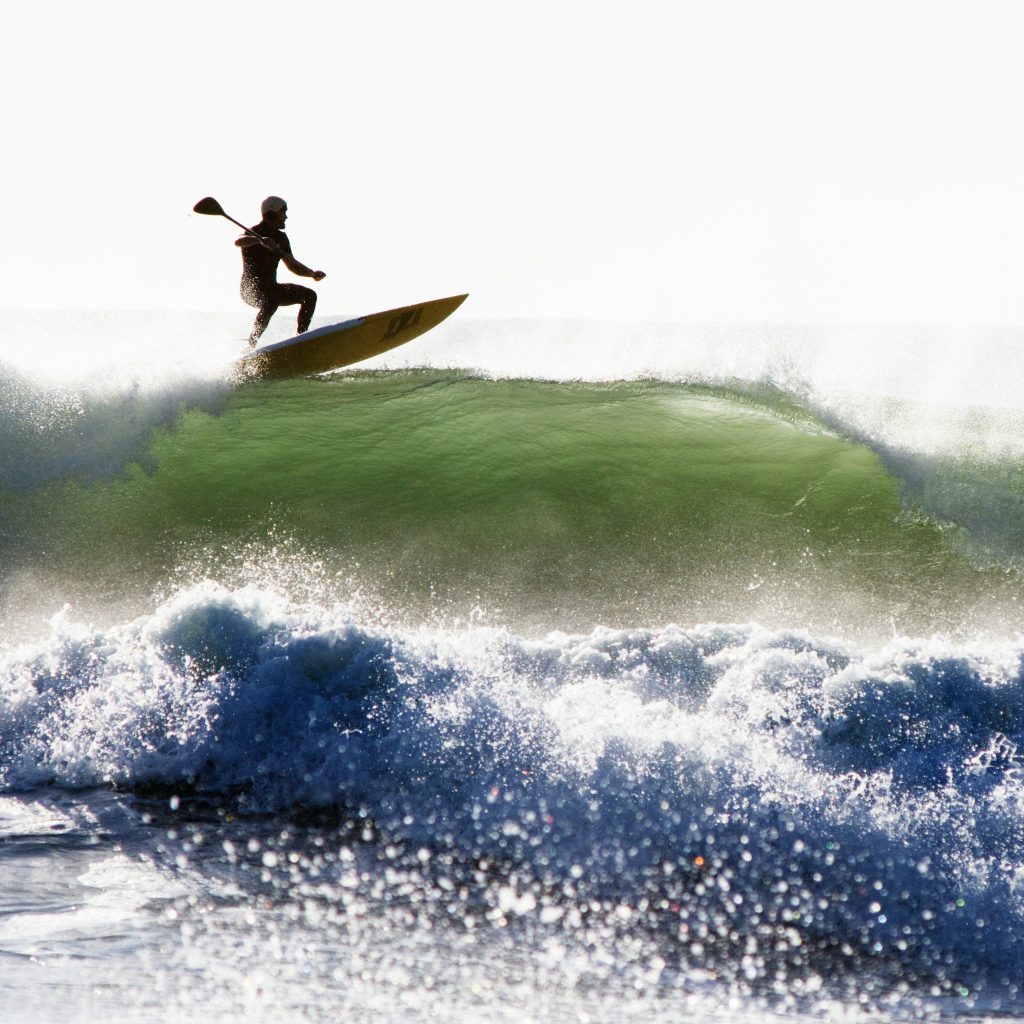
Advanced maneuvers like bottom turns, cutbacks, and top turns are essential for taking your SUP surfing to the next level. These techniques will allow you to gain more control in your rides. Remember, smaller fins can boost speed but require extra precision, so experiment with your setup as you progress. Practice these in calm waters first, and you’ll soon be confidently using them in the surf.
- Bottom Turn:
- The foundation for all other maneuvers after dropping in.
- How-To: Lean into the turn by shifting your body weight and using your paddle for support.
- Cutbacks:
- How-To: Initiate a sharp turn back towards the breaking part of the wave.
- Focus On: Weight distribution between your front and back foot.
- Top Turn:
- How-To: Turn off the top of the wave to change direction.
- Focus On: Timing and using your paddle for leverage.
- Using Smaller Fins:
- Provides less drag and more speed but requires better control.
- Experimenting with different models can enhance performance.
Practice makes perfect – spend time honing these techniques in calm water before taking them into the surf.
Common Mistakes in SUP Surfing and How to Avoid Them
SUP surfing can be incredibly rewarding, but it’s easy to fall into some common pitfalls, especially as you’re learning. Here’s how to avoid mistakes that could impact your performance or safety, so you can surf with confidence and respect.
Stiff as a Board?
Staying rigid on your board can throw off your balance. To improve your stability, loosen up and bend your knees to better absorb the motion of the waves. Relaxation is key to flowing with the ocean’s rhythm.
Overlooking the Paddle
Your paddle is much more than a tool for forward motion. It’s also essential for balance and turning. Use it to stabilize yourself during maneuvers and stay in control on the wave.
Ignoring Safety Gear
Safety is critical in SUP surfing. Always wear a Personal Flotation Device (PFD) where required, and don’t forget your leash. It keeps you connected to your board, which can double as a flotation device in rough conditions.
Disregarding SUP Surfing Etiquette
Respect the unwritten rules of the surf. Traditional surfers have the right of way, and it’s important to know your place in the lineup. Remember, the surfer closest to the peak has priority, so don’t cut in. SUP surfers should be mindful of keeping the peace in the water.
Environmental Stewardship and Ethics in SUP Surfing
As SUP surfers, we have a responsibility to protect the very waters that give us so much joy. By practicing environmental stewardship, we can ensure that the ocean remains healthy for future generations of surfers and marine life.
Respecting Marine Life
When you’re out on the water, remember that you’re a guest in the ocean’s ecosystem. Keep a respectful distance from marine animals and avoid disturbing their natural habitat. Always leave no trace – dispose of trash properly and consider joining a beach clean-up to make a positive impact.
Eco-Friendly Practices
Choosing sustainable gear is a simple yet effective way to reduce your environmental footprint. Look for eco-friendly materials like EPS foam core boards and other products that minimize harm to the environment. Additionally, support conservation efforts and organizations dedicated to preserving marine ecosystems.
Remember: The ocean provides us with endless enjoyment and life! Let’s show our gratitude by doing our part to protect and preserve it.
Best SUP Surf Spots in the UK
The UK has plenty of great spots for SUP surfing, each offering something a little different. If you’re looking for steady waves or just beautiful scenery, there’s a spot for every skill level. Here’s a quick look at some of the best places to enjoy Stand Up Paddle Surfing around the UK.
1. Cornwall, England
Why: Cornwall is the UK’s premier surfing destination, boasting renowned beaches like Fistral Beach, Watergate Bay, and Perranporth. With consistent waves and a stunning coastline, it’s perfect for Stand Up Paddle surfing. Whether you’re a beginner or an advanced surfer, Cornwall offers a variety of surf breaks to suit all skill levels.
2. Gower Peninsula, Wales
Why: The Gower Peninsula features beautiful beaches such as Llangennith and Rhossili Bay. These spots offer excellent waves and less crowded conditions compared to more popular areas. The natural beauty and diverse surf conditions make it ideal for SUP surfers looking to explore new waters.
3. Bournemouth, Dorset

Why: Bournemouth’s seven-mile stretch of sandy beaches and its artificial reef at Boscombe make it a great spot for SUP surfing. The relatively gentle waves are suitable for beginners and intermediate surfers seeking a full-body workout in scenic surroundings.
4. Thurso, Scotland
Why: Located on Scotland’s north coast, Thurso is famous for its powerful waves and is considered one of Europe’s best cold-water surf destinations. For experienced SUP surfers seeking a challenge, Thurso provides thrilling conditions in Scottish scenery.
5. Scarborough, North Yorkshire
Why: Scarborough offers consistent surf conditions and a welcoming local surfing community. Spots like Cayton Bay are popular among SUP surfers for their reliable waves and great views.
Preparing for Your Stand Up Paddle Surfing Trip in the UK
Before you head out for a SUP surfing trip in the UK, a bit of preparation goes a long way. Here are some tips to make sure you are prepared to get the most out of your SUP Surf Trip.
Check Weather and Tides: The UK’s weather can be unpredictable, so always check the forecast and tide times before heading out.
Wetsuit Essential: Due to cooler water temperatures, especially outside of summer months, a good quality wetsuit is recommended.
Local Regulations: Be aware of any local guidelines or restrictions regarding water sports. Some beaches may have designated areas for surfing and paddling.
Respect Wildlife: Many UK coastal areas are rich in marine life. Keep a respectful distance from wildlife and adhere to any conservation rules.
Adventure Awaits: Exploring the UK’s coastlines offers a unique Stand Up Paddle surfing experience. From the rugged cliffs of Cornwall to the serene beaches of Wales, there’s a spot for every SUP surfer to enjoy.
Fun SUP Surfing Fact Break!
Did you know that SUP Surfing originated in Hawaii as an offshoot of traditional surfing? It’s like surfing’s friendly, more versatile cousin who also does yoga and goes fishing. It’s truly a great way to enjoy the water and have a blast.
FAQs and Problem-Solving in SUP Surfing
Common SUP Surfing Challenges
Q: I’m struggling to maintain balance when catching waves. Any tips?
A: Focus on your foot position—keep your knees bent, weight centered over the middle of the board, and eyes looking forward. Practicing your surf stance and engaging your core muscles will help.
Q: How do I recover from a wipeout safely?
A: Protect your head with your arms as you surface, be aware of your board’s location, and avoid panicking. Always hold onto your paddle and consider wearing a personal flotation device.
SUP Surfing Equipment Troubleshooting
Q: My inflatable Stand Up Paddle board isn’t holding air well. What should I do?
A: Check for leaks using soapy water to identify punctures. Inflatable boards usually come with a repair kit for minor damages.
Q: Should I switch to a hard board for better performance?
A: Hard boards can offer better performance, especially in surfing conditions, but they require more care. Consider your skill level and whether you’re ready for a more responsive board.
Additional SUP Surf FAQs
Q: What are the best Stand Up Paddle boards for beginners?
A: Inflatable Stand Up Paddle boards with a larger volume are ideal for beginners. Boards like the Cruiser 11’0″ by Red Paddle Co offer excellent stability and are user-friendly.
Q: How do I improve my balance on a SUP board?
A: Practice balance exercises like single-leg squats and SUP yoga. Focus on maintaining a proper standing position and engage your core muscles.
Q: What is the proper surf stance in Stand Up Paddle surfing?
A: Place your front foot near the center handle of the board and your back foot towards the tail. This surf stance allows for better control and maneuverability when riding waves.
Q: Is an inflatable SUP board suitable for surfing?
A: Yes, inflatable SUP boards have improved significantly and can be suitable for SUP surfing, especially for beginners. They offer a larger volume and increased stability, which is helpful when learning to balance and catch small waves. However, for more advanced Stand Up Paddle surfers, a hard board might provide better performance due to its rigidity and responsiveness.
Q: How important is the paddle blade design in Stand Up Paddle surfing?
A: The paddle blade design significantly affects your paddling efficiency and control. A larger blade provides more power per stroke, aiding in powerful strokes needed to catch waves. A smaller blade allows for a higher cadence with less effort, which can be beneficial for quick strokes and maintaining speed. The blade’s shape and angle also influence how the paddle interacts with the water surface.
Q: What safety equipment is recommended for Stand Up Paddle surfing?
A: Essential safety equipment includes:
- Personal Flotation Device (PFD): Wearing a PFD is a good idea and may be legally required in some areas.
- Leash: Keeps you connected to your board, preventing it from drifting away.
- Appropriate Attire: Wetsuits or rash guards based on water temperature.
- Helmet: Optional but recommended in areas with rocks or reefs.
Q: Can SUP surfing help improve my fitness level?
A: Absolutely! Stand Up Paddle surfing provides a full-body workout that improves:
- Balance and Coordination: Constant adjustments engage stabilizing muscles.
- Core Strength: Maintaining balance and performing maneuvers strengthen the core.
- Upper Body and Back Muscles: Paddling works the shoulders, arms, and back.
- Cardiovascular Health: Paddling and riding waves elevate the heart rate.
Q: How does wind affect Stand Up Paddle surfing conditions?
A: Wind is a huge factor in SUP Surfing.
- Offshore Winds: Blow from land to sea, creating cleaner wave faces ideal for surfing.
- Onshore Winds: Blow from sea to land, causing choppy conditions and making it harder to catch waves.
- Windy Conditions: Can make balancing and paddling more challenging. It’s important to assess wind strength and direction before heading out.
Final Thoughts on SUP Surf Techniques
Stand Up Paddle Surfing is an incredible water sport that offers a full-body workout and a chance to connect with nature.
Remember, every expert was once a beginner. So, embrace the learning curve, respect the ocean and fellow surfers, and most importantly, enjoy the ride!
Now that you’re armed with these must-know techniques, it’s time to hit the water. See you out there, mastering the waves and making memories!
For SUP Surf Activities, Courses and Adventures near you, visit adventuro SUP Surfing!