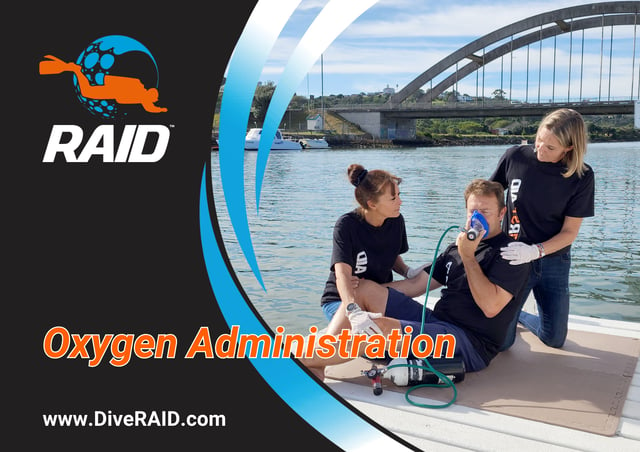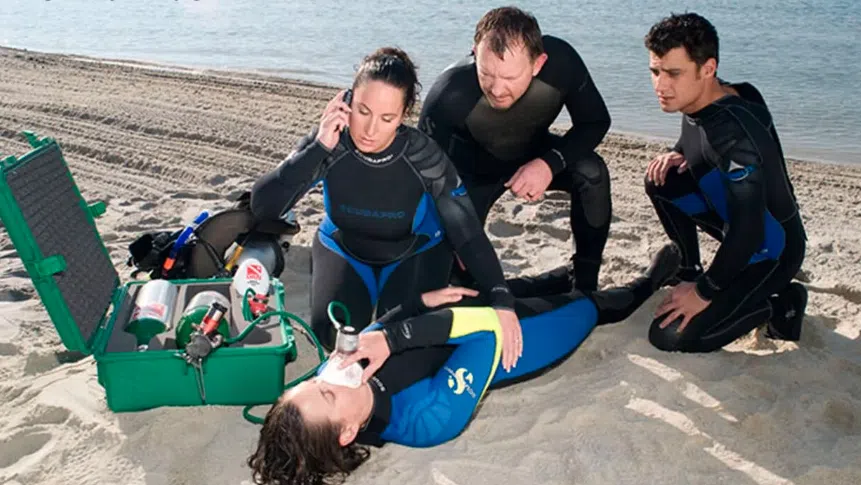

This course is focused and practical, with no scuba diving sessions. It combines theory and hands-on practice to build your confidence in handling oxygen delivery equipment and responding in emergencies.
Many centres combine this course with EFR or PADI Rescue Diver for a well-rounded safety training experience. The course is typically delivered by an instructor in a classroom or workshop setting, but facilities and equipment may vary slightly by location.
You'll leave the course with a PADI Emergency Oxygen Provider certification card and a strong foundation in emergency preparedness—an essential part of responsible diving.
Completing the PADI Emergency Oxygen Provider course gives you the skills to recognise scuba diving illnesses that may require emergency oxygen—such as decompression sickness and lung over-expansion injuries—and to confidently administer oxygen using a range of delivery systems. It’s a valuable qualification for all divers, especially those diving in remote areas or working as guides, instructors, or dive safety officers.
While it does not replace formal first aid or CPR training, the course complements certifications like PADI Rescue Diver, Emergency First Response (EFR), and Divemaster. Many dive professionals are required to hold this certification as part of their professional development. Even if you're not a diver, this course equips you to assist someone in need until emergency services arrive. It's a key component of a comprehensive dive safety plan and a strong step toward becoming a more capable and prepared dive buddy.
The Emergency Oxygen Provider course typically takes between 2–4 hours to complete. It is often run as a half-day session in a classroom or dive centre environment. Time may vary slightly depending on group size and the level of practical discussion and hands-on practice.
The PADI Emergency Oxygen Provider course is a non-diving, performance-based certification. There is no final written exam; instead, you'll be assessed on your ability to correctly assemble and operate emergency oxygen equipment, deliver oxygen using various delivery systems (such as non-rebreather masks and demand inhalers), and respond appropriately in simulated dive emergency scenarios. Instructors guide you through hands-on practice and scenarios, ensuring you understand when and how to administer oxygen safely and effectively. To earn certification, you must demonstrate competence in each skill. Most participants complete the course in a few hours. Adventuro lists centres that follow PADI’s standardised assessment approach, but exact schedules may vary slightly.
Quick answers about this qualification. For anything else, use live chat or browse bookable activities below.
Find activitiesNo, you don’t need to be a certified diver to take the PADI Emergency Oxygen Provider course. It’s open to anyone interested in learning how to assist in dive-related emergencies, including non-diving friends, family members, or surface support team members. The skills you learn are valuable for anyone involved in water activities.
You’ll learn how to recognise diving illnesses treatable with emergency oxygen, assemble and handle oxygen equipment, and administer oxygen using different delivery methods. The course includes both theory and hands-on practice with equipment like non-rebreather masks, demand valves, and continuous flow units. You'll also learn safety precautions for handling high-pressure oxygen.
The PADI Emergency Oxygen Provider course typically takes 2 to 4 hours to complete. It's designed to be completed in a single session, with a mix of theory and practical skill development. Some centres may offer flexible scheduling options, which you can find and book easily on adventuro.
No, this course is entirely land-based. It focuses on the use of emergency oxygen at the surface in response to diving-related injuries. While it supports dive safety, there are no underwater skills or dives required. This makes it accessible to non-divers as well as certified divers.
Yes. Upon successful completion, you’ll receive the PADI Emergency Oxygen Provider certification. This is a non-expiring, standalone certification that demonstrates your ability to provide emergency oxygen in a diving emergency. Many dive professionals and rescue divers add it to their toolkit.
It’s not a prerequisite for other PADI courses, but it’s highly recommended—especially if you’re pursuing the PADI Rescue Diver or Divemaster certifications. Having oxygen administration skills is a key part of dive emergency response, and it complements training in first aid and CPR.
You’ll use real emergency oxygen units, including cylinders, regulators, flow control devices, and delivery masks. Your instructor will guide you through assembly, use, and safety checks. All equipment is typically provided by the dive centre—check individual listings on adventuro for details.
Yes, and it complements your existing skills. While basic first aid and CPR are useful, this course specifically focuses on administering 100% oxygen in scuba diving emergencies like decompression sickness or lung overexpansion injuries. Many Rescue Divers and Divemasters complete it alongside EFR (Emergency First Response).
Absolutely. Dive professionals are often first on the scene in emergencies, and oxygen administration is a critical skill. Many employers and dive operations require or strongly prefer staff to hold this certification. It’s also a requirement for some PADI professional-level ratings.
You can browse and book Emergency Oxygen Provider courses with trusted PADI centres across the UK and beyond through adventuro. Each listing includes schedules, pricing, and what’s included. Whether you're preparing to assist others or expanding your qualifications, it’s easy to get started.